I know you’ve all been wondering: where has Bridget gone?
My library of excuses vary in legitimacy:
Has she been reading a lot? By some definitions of “a lot”, yes. By others’, forgive me.
Has she disappeared? Officially, kinda! Sometimes it takes two whole idle months of unemployment to pack up your life and move hemispheres. G’day from London, where I shan’t be for long, but more on that when I have some idea on what’s next for me. Busy girl.
Why did she pivot so jarringly back into cinematic commentary and then leave us hanging for over a month? I’m fickle, deal with it.
Does the aforementioned idleness means she’s been writing a lot? Yes, I’ve been writing a book of my own! And in an economy of accountability, I firmly believe that the more people I share this intel with, the closer I’ll get to finishing it and manifesting its presence in the universe. More on that later.
Because I’m both a giver and a firm believer in good habits, I’m back to share with you all some books that have touched me in the last little while. This summer was a season of epiphanies for me: one being, a good memoir, in almost any iteration, is like a balm. It can give you on a lonely night everything precious you get from overstaying your welcome at a café with an old friend, midnight wines on the couch with your soul mate, a long overdue phone call with your mum. And the thing I’ve learned to love about this corner of nonfiction, is that its breadth is boundless.
I used to baulk at people who suddenly found something that much more impactful if it was branded as “based on a true story” (ahem, war movies) because I’ve always believed that there is more triumph in crafting worlds so palpable that you believe them anyway, regardless of whether they’re fully made up. But as I mature (an ongoing process) I come to realise that the veracity in voices impacts hugely the sorts of stories a storied person can tell – spoiler, it’s as vast as the sky.
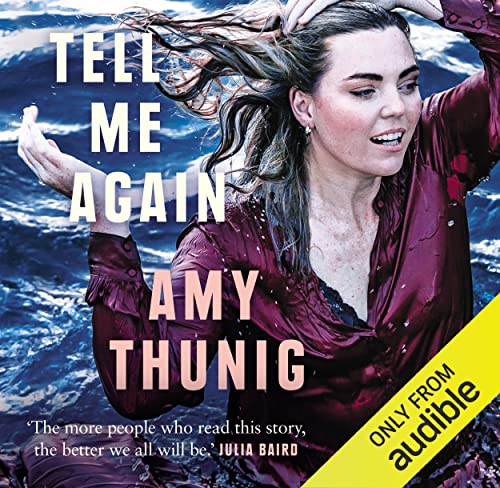
Tell Me Again – Amy Thunig
I picked this one up having recognised the title as being on an awards shortlist when it was going for free on Audible. Not my method of choice, as I celebrate reading as the ability to shut out the world and throw yourself into words – not the same as having someone’s voice do the distracting for you. But this audiobook, narrated by the author themself, was an intoxicating exercise in storytelling.
There is something so fascinatingly evocative and peaceful about the rhetoric of indigenous Australian storytelling, and crucially in Dr Amy Thunig’s retelling of the many tribulations and vicissitudes of their life that are so objective and pensive. They harness a universe in which blame and responsibility don’t fall like the dominos we are used to in much of western literature. Thunig touches on a cyclical spirituality of their people that imbues their story with a balance and tenderness that treats what would be pivotal plot arcs in another memoir as some sort of cumulative education in love, forgiveness, emancipation and commitment.
It is a triumphant story of both a self-made person, and also a story of people built entirely by their environments. I listened to it as I moseyed around my neighbourhood, on some long, languorous dusk time strolls. Thunig’s words painted images that complimented the sensory experience of lorikeets at sundown and dewy eucalyptus, and drew me in so intimately to a world I was not privy to but treasured knowing. It’s rare that I’ll recommend something in an Audiobook format – but I was truly transported and changed by the aural experience. Which isn’t to say I won’t be buying a copy to highlight and scribble the moments of impact I wish to remember again and again.
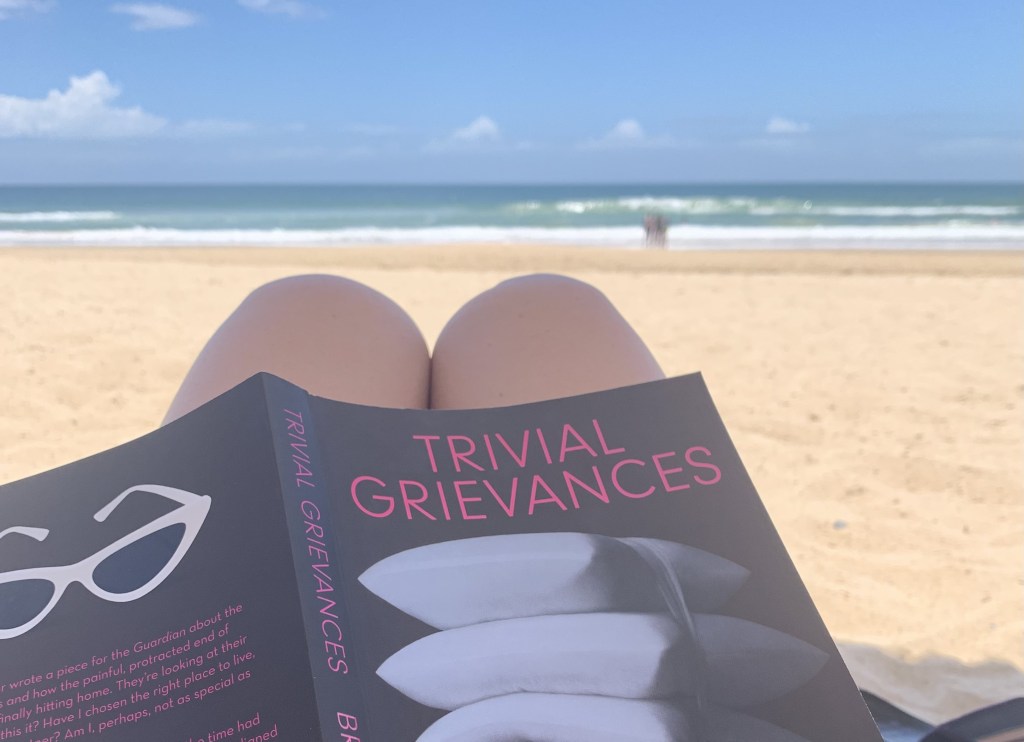
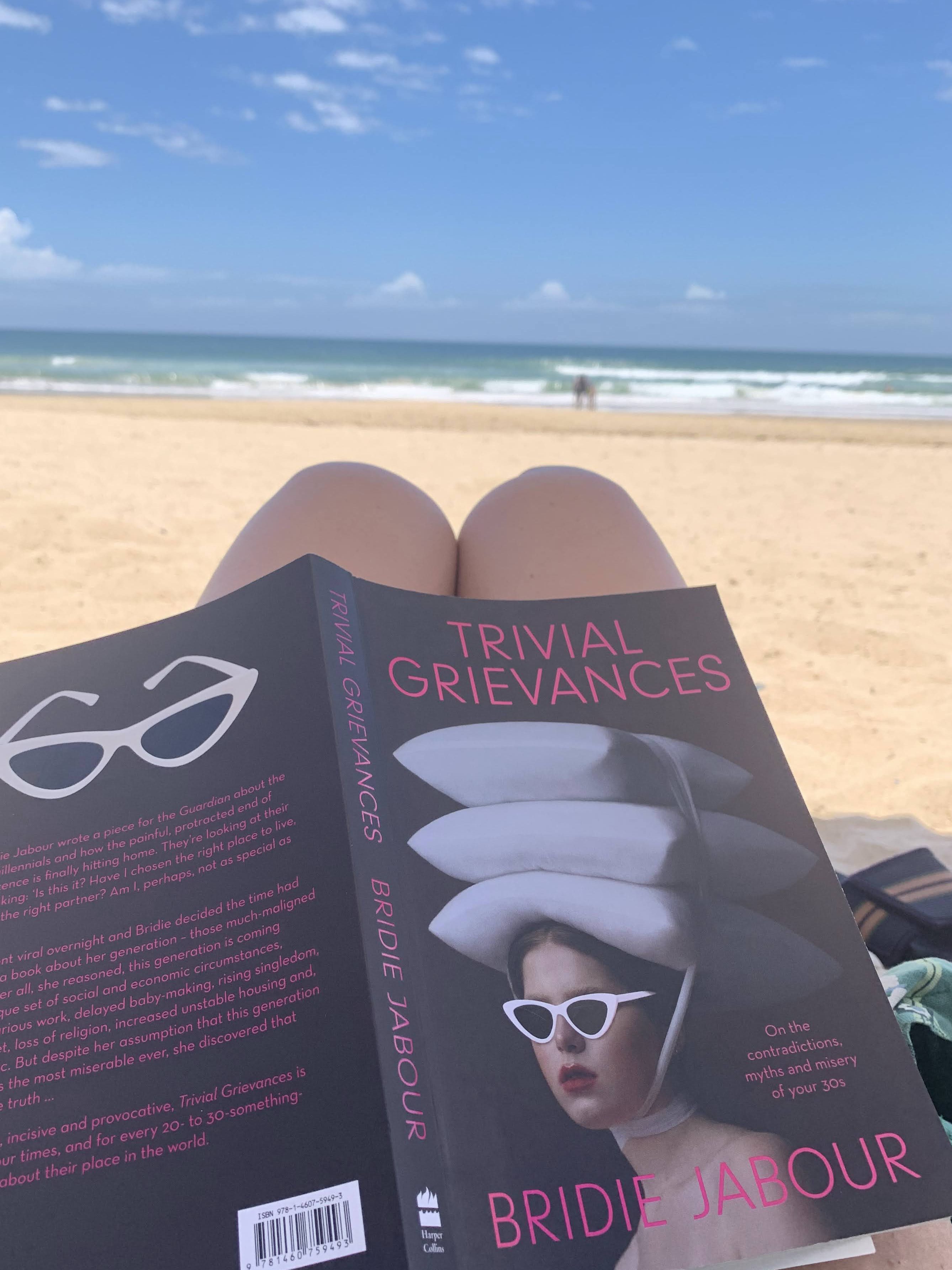
Trivial Grievances: on the contradictions, myths and misery of your 30s – By Bridie Jabour
This book treats a familiar precipice with varying degrees of relatability. And hence, I think I was able to garner as much from it at 26 as the 30 year old friend to whom I gifted this book for her birthday, as perhaps a cousin entering her 40s who’s just coming around to motherhood. We are all more or less somewhere on this sliding scale between brazenly behaving like we know everything and then falling into the abyss of learning just how much we don’t know.
Bridie Jabour’s upbeat and scrupulous dissertation on one’s early thirties reads very much like a longform Guardian article, and while that sits toward the end of the spectrum of non-fiction that I tend to enjoy the least, the philosophies rendered within the novel were delicious, and dicey and provocative and endearing. Jabour made an interesting companion to long lazy days on the beach, and surprised me with what she added to my personal arsenal in discussions about the doom of youth, the malaise of aging past our earliest milestones without direction, and finding ways to enjoy the unique humdrum of it all.
While the research and references to the global phenomenon’s taking place in my generation served to placate my own sense of doom, I enjoyed most in this book the divulgence of Jabour’s own personal histories: the ripple effect of being raised by siblings, the divergence of a life defined by crucial choices early on, and even the frankness of inscrutable details like income, career progression, making light of all the lockdowns, etc. And most surprisingly, I cherished the camaraderie and comfort that came with calling out the bullshit I regrettably subscribe to about needing a wake up call: your life isn’t that hard, you aren’t that special, just enjoy yourself.
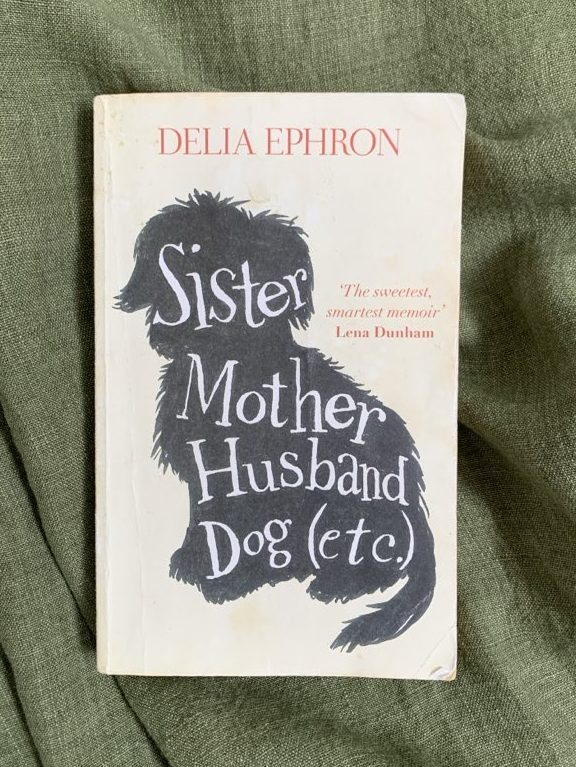
Sister, Mother Husband, Dog, etc. – By Delia Ephron
I’ve known about this book for some time, and while it’s been publicly available for over a decade, I still felt like I was privy to weighty, scandalous secrets. I imagine being one of four sisters and each with a creative endeavour, and what it must be like for the runners up when one is a cookie cutter Jo March trailblazing ahead. (And I imagine this quite a bit, thank you miss Alcott.)
Nora Ephron remains a creative beacon for me. While some mothers’ mantra is, “if you can’t think of anything nice to say, don’t say anything at all,” or “only a hussy wears a top that exposes her bra straps,” Phoebe Ephron famously raised her four daughters on the maxim of, “Everything is Copy.” Over her career, Nora famously aired dirty laundry dressed in irony in her comic and earnest debut novel about food and heartache: Heartburn. She pulled at the yarns of friendships, plagiarising the humanness she could garner from her own relationships to write two of the richest, truest characters to ever have resisted falling in love: Harry, when he met Sally. Her folio of journalism for a bunch of New York publications over her decades long career feature loud, pithy, lofty claims of certainty about anything that struck her as interesting, with interminable certainty and a readiness to throw someone else on the pyre as sacrifice to a good punch line.
In Sister, Mother, Husband Dog, etc., I unlocked the other side of the same coin: secrets of what it must have been like, raised on the same rigor and wit, but to have responded with a softness, or even just a little bit less immediate, steamrolly success. Delia’s relationship with her parents upend much of the foghorning Nora did about her ultimately alcoholic, dysfunctional and jilted parents; colouring in with watercolours the shadows left obscured.
Delia’s candour is less declamatory but just as charming, and her chapters on grieving for Nora and forgiving her parents and the plight of finding the perfect brownie and New York City resonate for me with the same significance. As a writer myself who sometimes lacks the confidence or the vision of success, I felt heartened by Delia’s voice. I thought, “Wow. Maybe I’m not a Nora at all. Maybe I’m a Delia. Cool.”
Perhaps this wasn’t the wisest book to prescribe to my own mother who lost a sister and a mother all too soon (and who I hope god forbid will never have t grieve her husband or her/our dog) but I do feel like the delicacy and lightness with which Delia handles the femininity, serendipity and growth within her memoir is special, and alleviates an intensity that all too often plagues the ambitious.
Honourable mention to the following:
Bite Back by Hannah Ferguson. I’m not yet equipped to comment on this as I’ve left my copy on the other side of the world unfinished. I didn’t turn to this book as my nightly escapism or for my mental aerobics over morning coffee, but more as a bible: referred to in moments of desperate need of counsel. (After punishing the foreword with as much veracity as a New Yorker short.) The first third of this book sent shockwaves through me and my immediate circles, doing some crucial work (that I admittedly should have done for myself a long time ago) on reframing how I absorb information and how I formulate my own reactions to politics and media. A crucial read, if for not much else other than the pungent, rattling foreword and some laugh-out-loud metaphors that humanise the whole ordeal. I’ll get back to this one once I’m in the same country again as my bookshelf, but in the meantime I’ll sharpen my critical thinking by keeping up with Hannah’s social accounts, @cheekmedia.co and the Big Small Talk podcast.
All time greats, that I’ll cover another time: The Year of Magical Thinking by Joan Didion; How Proust Can Change Your Life by Alain de Botton; Blueberries by Ellena Savage. How about you pop those on your reading list now, and by the time I get around to them we’ll have something to talk about together.
Sincerely, earnestly, and casually, Bridget x

 The Unending Ode